I’m old enough that I remember the anti-pollution ad featuring a native fellow, dressed in traditional garb, paddling through the woods and then coming upon the garbage that signals that white people have been there. The closing shot shows him staring stoically at the camera with a tear falling from his eye. As hokey as it was, I must admit that it was a pretty powerful ad. Check it out: https://www.youtube.com/watch?v=j7OHG7tHrNM
I never liked Western movies, so my conception of Natives was probably more influenced by this sappy commercial than by Hollywood’s Bigotry Factory. Regardless, I never saw or read very much about the people we stole this country from until I saw a movie called Smoke Signals and read Ten Little Indians by the author of the source material for the movie, Sherman Alexie. I know nobody ever listens to me, but please, see the former and read the latter. While we’re at it, I insist you also read Alexie’s The Absolutely True Diary of a Part Time Indian, a sweetly painful and mostly autobiographical coming of age story that takes place mostly on an Idaho reservation.
I was thus pleased to see the show Reservation Dogs on my Hulu queue. Like a lot of new shows, it’s pilot season is short, so I’ve already watched it through twice. Originality is not my only criteria for liking a TV show, but it’s definitely a priority.
As far as I know, it’s the first major TV show or feature length movie for which the cast is nearly 100% native, as well as its creative team. The result is a story of a group of native characters created by nobody except other natives.
It also is a revelation because I have heard about the existence of native “reservations” since I was little, but I had no idea what they even looked like. True, it turns out that the town where it was shot (Okmulgee and other locations in Oklahoma) looks a lot like any other Midwest town, except it is populated mostly by natives. Still, the “Indian Reservation” was created by the federal government, presumably to care for the Native survivors of the so-called “Columbian Exchange.” I think it would benefit both native and non-native people to see the nose-holding result of the government’s minimalist native care. For the time being, I’m not even going into the inconceivable crime of forcibly sending native children to re-education schools, an astounding and disturbing tragedy that is much bigger than this review.
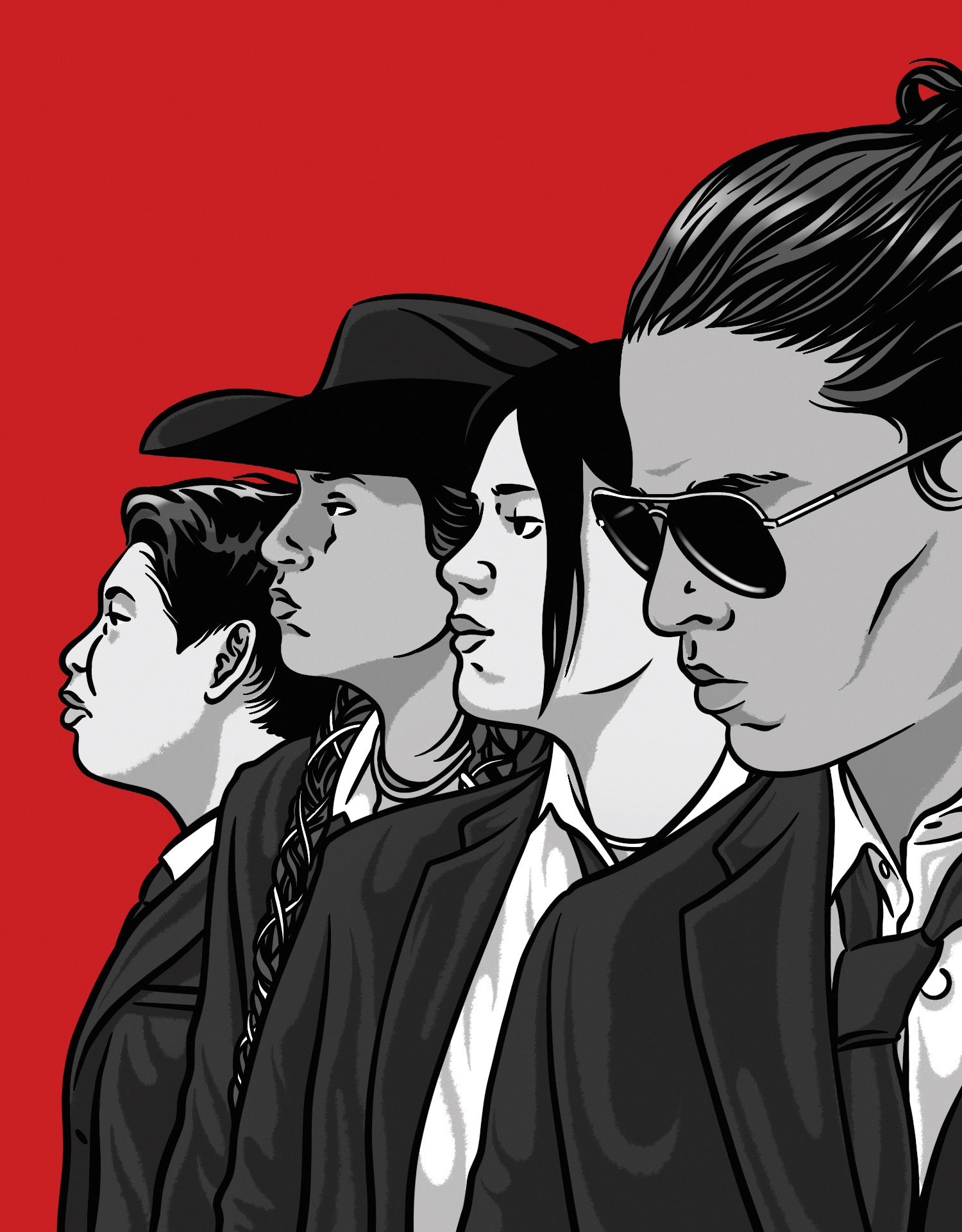
What I have found so intriguing by this work is the similarity between Willie Jack, Cheese, Bear, and Delaura and some of my former students like Lavera, Tyrese, Darnell, and Erianna. Both groups have little in common except that they are/were petty criminals, young, poor, and from groups of people who repeatedly outraged America’s cultural majority by existing.
 Bittersweet Abattoir